Sail smarter, float better

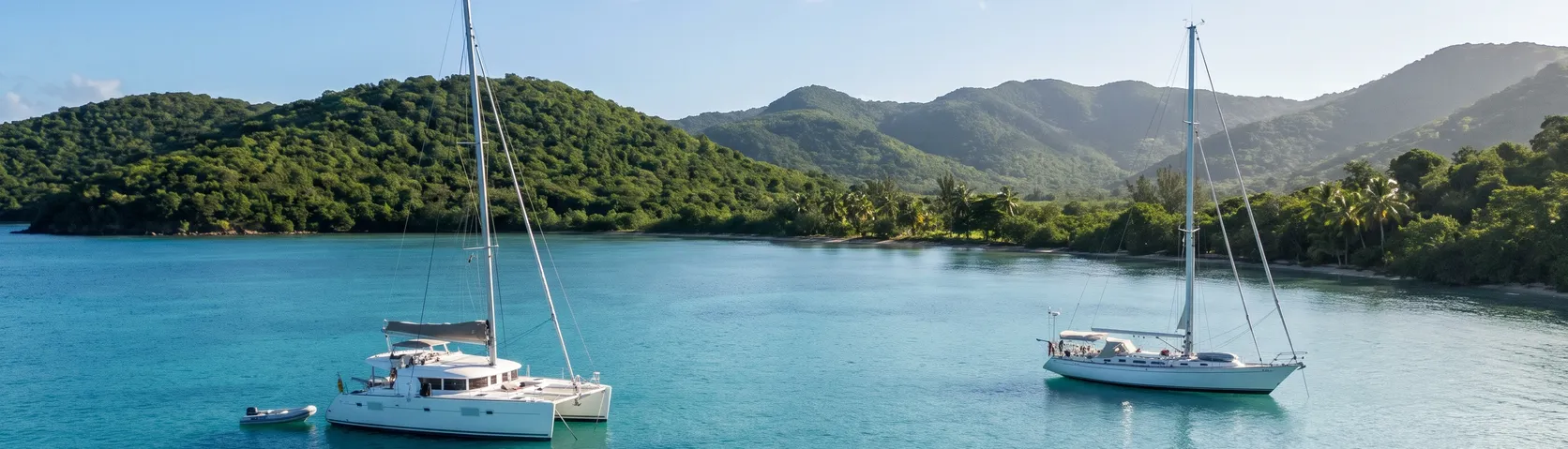
Table of Contents hide
A bareboat charter means you rent a sailing yacht without a professional skipper or crew and sail it yourself, as the skipper. The charter company hands over the boat, its gear and a briefing; you plan the route, run the boat and bring it back. It suits sailors who have already skippered a cruising boat and want a week or two on the water without owning one.
In shipping law, "bareboat charter" also means a long-term lease of a commercial vessel. This guide is about holiday sailing. It explains how a bareboat charter works, what charter companies ask for, what it really costs and how to prepare for your first one. Sources were read on 17 November 2026; charter terms and fees change, so check the current details with the company you book.
Key Takeaways
- You are the skipper: on a bareboat charter you sail, navigate and make the safety decisions yourself; a skipper can usually be hired as an extra.
- Companies set the bar: most ask for a sailing resume rather than a license, but some countries, such as Croatia, require a recognised license and a VHF radio certificate by law.
- The boat fee is only part of the cost: budget for the deposit or damage waiver, fuel, moorings and marinas, local permits and taxes, provisions and travel.
- Check-in matters: inspect the boat and inventory at handover, attend the briefings and return the boat on time with full tanks.
- Start somewhere easy: line-of-sight sailing areas with sheltered water and moorings, such as the British Virgin Islands, are commonly suggested for a first charter.
Bareboat vs Skippered vs Crewed Charters
Charter companies sell the same boats in several ways. Sunsail describes a bareboat charter as one that puts you in charge of your sailing holiday. The Moorings adds that on a bareboat you are responsible for planning the itinerary and provisioning, while its crewed yachts come with a captain and a chef.
| Type | Who skippers | Experience you need | Main extra costs | Suits |
|---|---|---|---|---|
| Bareboat | You | Enough to skipper the boat in that area, judged by the company (and the law in some countries) | Deposit or damage waiver, fuel, moorings, provisions | Experienced sailors who want independence |
| Skippered | A hired professional skipper; you can help sail | None required | The skipper's fee; the skipper uses one cabin | Less experienced crews, or anyone who wants to learn on the way |
| Crewed | A professional captain, usually with a cook or chef | None | Crew, food and service, usually priced as a package | Guests who want a holiday without boat work |
| Flotilla | You, on your own boat, sailing with a group led by a professional crew | A resume and, at some companies, a license (or hire a skipper) | Similar to bareboat, plus the flotilla fee | First-time skippers who want support nearby |
On Sunsail's skippered charters, the hired skipper takes a cabin aboard. On a flotilla, each yacht sails independently but the group travels together, with a lead boat carrying a skipper, a host and a technician. Choosing between a monohull and a catamaran is a separate decision; our comparison of chartering a catamaran or a monohull covers it.
How a Bareboat Charter Works, Step by Step
- Choose the area and season. Pick a cruising ground that matches your experience (see the destinations section below) and check its weather season.
- Choose the boat. Size, number of cabins and heads, monohull or catamaran. The number of people aboard is limited: Navigare's terms, for example, say it must not exceed the number on the crew list, and Croatia's tourist board tells boaters not to exceed the boat's maximum number of passengers.
- Submit your sailing resume. The company checks your experience against the area and the boat (next section).
- Book and pay. A deposit secures the booking and the balance is due before departure. Navigare's BVI booking page, for example, asks for 30% at booking and the remaining 70% 60 days before departure.
- Plan provisions and the route. Order a provisioning package or shop yourself, and sketch a route with short first days.
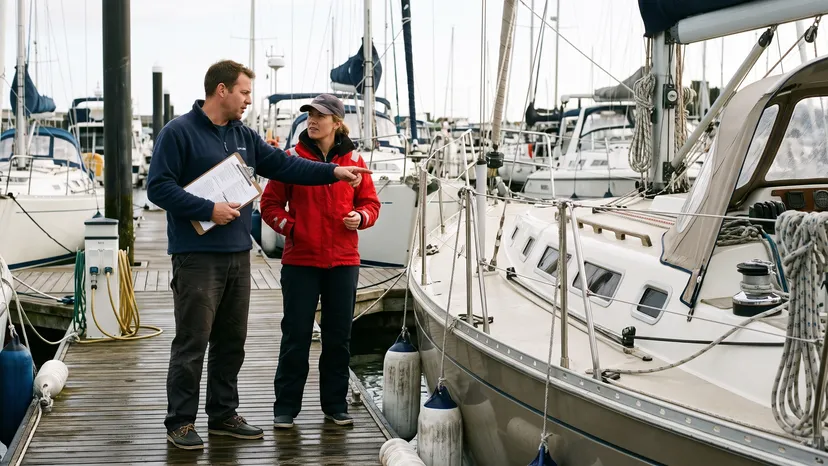
- Check in. Expect a boat orientation and a chart briefing on the local area; Sunsail gives both on arrival, and The Moorings' BVI base says all its briefings are mandatory. The US booking terms of The Moorings and Sunsail give you the right to inspect the yacht, her gear and inventory. Go through the inventory, the safety gear, the engine, the dinghy and the anchor windlass, and photograph any existing damage.
- Sail. Companies set operating rules: the same terms, for example, forbid sailing in darkness and ask for at least two people aged 18 or over aboard while sailing.
- Check out. Return on time, usually with full fuel tanks. The same terms charge at least one day's price for every three hours late, and the check-out includes an inventory and a check for loss or damage before the deposit is released.
Start and end times vary by company and base. The Moorings in the BVI boards at noon and asks you to leave by 11am on the last day; Navigare checks in from 5pm and out at 9am at its European bases. Some bases, such as Sunsail's in Athens, want the boat back the evening before for the final checks.
Do You Qualify? What Charter Companies Ask For
In the United States no federal license is needed to skipper your own recreational sailboat, although your state may require a boating education card. US charter companies, and many abroad, judge your experience instead. The Moorings states that no formal certification is required for most of its regions. Both The Moorings and Sunsail grade destinations by level and ask for an online sailing resume. Their entry level asks for at least 9 days and 100 miles as skipper on a boat of similar size; the harder levels ask for more days and miles.
Certificates still help. Charter companies list courses such as ASA 104 Bareboat Cruising, which prepares you to skipper a keelboat of about 30 to 45 feet, and US Sailing Bareboat Cruising, plus the ICC for sailing abroad. Our guide to sailing licenses and certifications explains each one and how to write a sailing resume.
Some destinations add their own rules:
- Croatia (by law): the skipper needs a recognised license and, when the boat has a VHF radio, a radio operator's certificate. The Croatian ministry's table of recognised certificates accepts an ICC valid for coastal waters, and lists US Sailing Bareboat Cruising and the ASA bareboat course for chartered yachts up to 18 m.
- Greece: charter companies require a licensed skipper plus a second crew member (The Moorings asks for an able-bodied crew member, Sunsail for a First Mate of Competent Crew level); Sunsail and The Moorings say a Day Skipper certificate is not accepted there.
- British Virgin Islands and Queensland's Whitsundays: the companies ask for a resume, and Tourism Whitsundays states that no formal boating license is required for bareboat charters in Queensland; operators assess your competence instead.
Expect the company to check what your resume says. Under the UK terms of Sunsail and The Moorings, a company skipper may come aboard free of charge for the first three hours, and if the skipper judges you not competent, a paid skipper can be required for the charter. The Moorings' BVI base likewise says it will arrange a skipper at your expense if staff doubt your ability. Separately, The Moorings offers a "Friendly Skipper" who sails with you for the first afternoon. Be accurate about your experience.
What a Bareboat Charter Costs
The boat fee depends on the season, the size and age of the boat, and the area. It is only part of the total. Charter companies list these other costs:
- Security deposit or damage waiver: see the next section.
- Fuel: Sunsail says fuel is not included with bareboat charters. Most boats are handed over full and must come back full; otherwise the company charges for the fuel, sometimes with a fee on top. Navigare estimates fuel in the BVI at around $6 a gallon.
- Moorings and marinas: Sunsail lists mooring and marina fees as not included. In the BVI, overnight mooring balls cost about $50 to $70 a night depending on the ball and the location, according to the Sunsail and The Moorings BVI pages.
- Local permits and taxes: in the BVI, the cruising permit and the National Parks permit are added to your charter invoice; in Croatia, a lump-sum tourist tax for boaters depends on the boat's length; Navigare's Croatian bases also list cruising taxes and clearance fees as extras.
- Preparation or starter fees: some companies charge a fee for the final cleaning and a starter kit (Navigare, Croatia).
- Provisions: food and drink are not included on a bareboat. Sunsail's BVI page estimates groceries at about $350 to $400 for four people for a week.
- Extras: prepaid fuel, a sleep-aboard night, a skipper or cook, kayaks or paddleboards, Wi-Fi and similar (The Moorings' extras).
- Travel: flights, transfers and a hotel night if the boat is not ready on arrival.
Use our sailing trip budget planner to put these together. Prices change every season, so take the totals from your own quote rather than from averages.
Insurance, Deposits and Damage Waivers
The charter company insures the boat, but you pay a security deposit that covers damage to the yacht, its contents or third-party property up to that amount. Many companies offer a non-refundable damage waiver that lowers the deposit. The Moorings' Yacht Damage Waiver, read on 17 November 2026, shows how large the difference can be:
| Boat | Waiver per day | Deposit with waiver | Deposit without waiver |
|---|---|---|---|
| Monohull, 40-49 ft | $90 | $842 | $6,175 |
| Catamaran, 42-44 ft | $140 | $1,091 | $8,005 |
A waiver does not cover everything: The Moorings states that negligence or reckless conduct leaves you liable for the full loss. Read the exclusions before you rely on it.
Specialist insurers also sell charter cover. Pantaenius, for example, offers deposit insurance that covers the full or partial retention of your deposit, and skipper liability insurance for damage the skipper or crew cause to third parties, which can also cover gross-negligence damage to the charter yacht. Compare the terms with the company's waiver, and add travel insurance for cancellations and medical costs. This guide does not recommend a provider.
Your First Bareboat Charter: Checklist
Before you book
- Your resume honestly matches the area's level, and at least one other crew member can handle the boat and recover a person overboard.
- Your crew can pick up a mooring ball, anchor and dock. A charter company quoted in SAIL (2021) suggests docking and anchoring clinics before a charter, and the magazine calls Med mooring a must-have skill in the Mediterranean. Our guides on how to anchor a sailboat and how to dock a sailboat cover the basics.
- You have any license the country requires, and the VHF certificate where needed.
- You know what the price includes, the deposit amount and the cancellation terms.
At check-in
- Inventory: count and test what is listed, including the dinghy and outboard, snorkel gear if supplied, and tools.
- Safety: life jackets for everyone, harnesses, flares, fire extinguishers, first-aid kit, liferaft service date and the man-overboard gear.
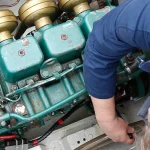
- Engine and systems: oil and coolant, the fuel and water levels, the bilge pumps, the batteries and the gas system.
- Ground tackle: the windlass works, the chain is marked, and you know the anchor's weight and chain length.
- Paperwork and briefing: the ship's papers, the crew list, the area's restrictions and the base's emergency contacts.
What to pack
- Soft bags, not hard suitcases: The Moorings calls soft-sided luggage essential because of the storage aboard.
- Deck shoes, a light waterproof jacket, sun protection and a dry bag; see our sailing packing list.
- Your license, VHF certificate and resume, plus copies of passports and documents.
- Medication and a change of clothes in your carry-on, as Sunsail advises for the BVI.
Where to Bareboat Charter for the First Time
Charter companies grade their easiest areas as line-of-sight sailing: you can see your next anchorage from where you are. Sunsail's entry-level bases include the BVI, Dubrovnik and Lefkas. Areas commonly suggested for a first charter, plus one more demanding option:
- British Virgin Islands: Cruising World describes relaxed sea conditions, protected waters, line-of-sight navigation and mooring balls. The charter bases forbid night sailing and ask you to be moored at least an hour before sunset.
- Croatia (Dalmatian coast): Sunsail describes lazy-line mooring, line-of-sight navigation and calm conditions around Dubrovnik. You need a recognised license and a VHF certificate. Our Croatia sailing guide covers routes and seasons.
- Greece, Ionian Sea: Sunsail markets Lefkas for gentle breezes, short distances and sheltered anchorages. Charter companies there require a licensed skipper and a second crew member.
- Chesapeake Bay: SAIL (2011) notes minimal tides and a mostly soft mud or sand bottom, and suggests a shallow-draft boat. See our Chesapeake Bay itineraries.
- Whitsundays, Australia: no license is required in Queensland, but operators set limits. The Queensland Yacht Charters base guide (2024), for example, states that bareboats cannot visit the outer Great Barrier Reef and must be anchored or moored at their first destination by 4pm.
- San Juan Islands (more demanding): Cruising World (2019) warns of currents often greater than 2.5 knots and unmarked rocks, so plan around tides and currents.
Bareboat or Skippered: How to Decide
- Choose bareboat if you have skippered a similar boat for several days, your crew can anchor, moor and recover a person overboard, and the area matches your level.
- Choose a skipper for a day or two if you are close: some companies offer a skipper for the first afternoon or first day.
- Choose a flotilla if you want to skipper your own boat with help nearby.
- Choose a skippered charter if you have little cruising experience, the area is demanding, or you would rather sail without the responsibility.
Frequently Asked Questions
What does bareboat charter mean?
It means renting a yacht without a professional skipper or crew. You act as the skipper and are responsible for the boat, the crew and the route. In shipping law the term also describes a long-term lease of a commercial vessel, which is a different thing.
Do you need a license to bareboat charter?
It depends on the country. In the US and the British Virgin Islands, charter companies usually ask for a sailing resume rather than a license. Croatia requires a recognised license and a VHF certificate, and charter companies in Greece require a licensed skipper. See our sailing license guide for the certificates that charter companies accept.
How much does a bareboat charter cost?
The boat fee varies by season, boat size and area, so get a quote. Then add the deposit or damage waiver, fuel, moorings and marinas, local permits and taxes, provisions and travel. The Moorings' published damage waiver, for example, is $90 a day for a 40-49 ft monohull (read 17 November 2026).
How many people can go on a bareboat charter?
No more than the boat's stated maximum and the crew list. Charter terms such as Navigare's limit the number aboard to the crew list, and Croatia's tourist board tells boaters not to exceed the maximum number of passengers. Count berths and heads, not just the passenger limit, when you choose the boat.
Is a bareboat charter safe for beginners?
Not for complete beginners. Companies expect you to have skippered a similar boat, and most require at least one experienced crew member. Beginners are better served by a skippered charter or a flotilla, or by a course such as ASA 104 or US Sailing Bareboat Cruising first.
What is the difference between a bareboat and a captained charter?
On a bareboat charter you are the skipper. On a captained or skippered charter a professional skipper sails the boat and is responsible for it; you pay for the skipper and give up one cabin.
Next Steps
Write your sailing resume, compare it with the level of the area you want, and practise anchoring, mooring and docking before you go. Then get quotes that list the deposit, waiver, fees and extras, and build your full budget. If your resume falls short, book a skipper for the first day or join a flotilla, and plan your bareboat charter for the following season.