Sail smarter, float better

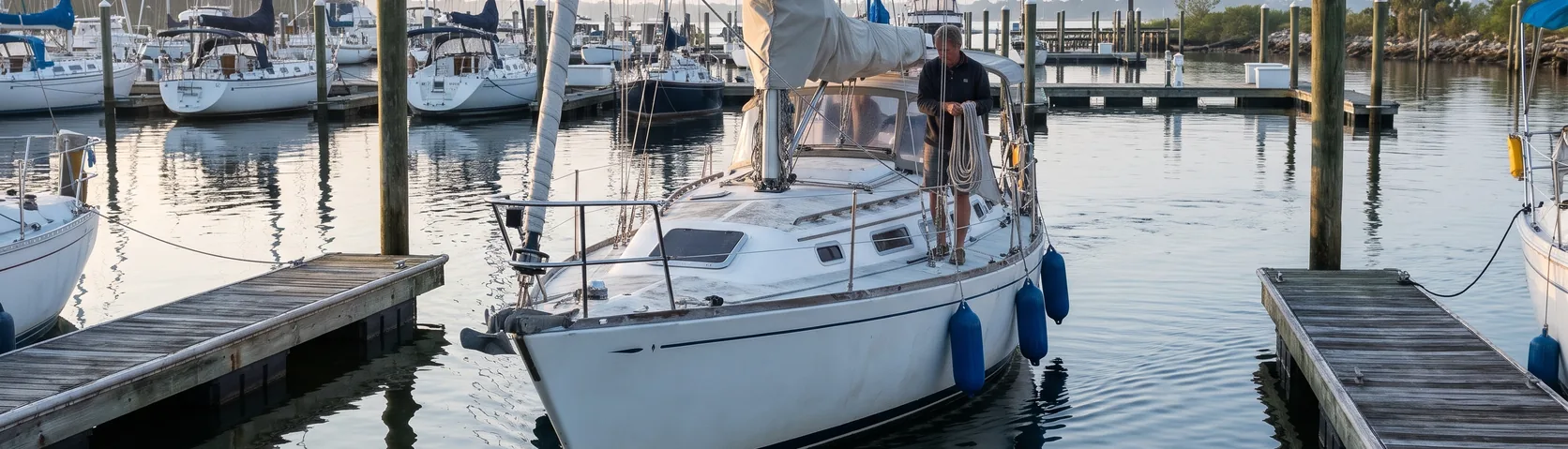
Docking a sailboat in a slip comes down to a short list of habits. Read the wind and current before you commit. Approach at the slowest speed that still lets you steer. Know which way your stern swings when you shift into reverse. Get one well-placed line on early. And go around for another try as soon as an approach stops working.
This guide covers the common US marina setup: a single-engine sailboat of about 25 to 40 feet and a slip with pilings and a finger pier on one or both sides. It is general guidance, not a replacement for hands-on instruction, and every boat handles a little differently. Sources were read on 13 November 2026.
Key Takeaways
- Plan for the wind first: whether it blows into, out of or across the slip decides whether you go in bow-first or stern-first and which line goes on first.
- Slow is in control: move only as fast as you need to steer, and use short bursts of power instead of steady throttle.
- Learn your prop walk: most boats swing their stern to one side in reverse; find out which way in open water and use it.
- Lines and fenders, not bodies: stop and hold the boat with a spring line and fenders, never with hands or feet.
- Going around is part of docking: back out and try again before a bad approach turns into contact.
Before You Approach
Most docking problems start before the boat reaches the fairway. Get the boat and the crew ready while there is still open water around you.
- Read the wind. Look at flags, other boats' wind indicators and the masthead fly. Note whether the wind will blow into the slip, out of it or across it.
- Read the current. Water streaming past pilings or a moored boat's lines shows the direction and strength of the current. In tidal water, check the tide table before you come in.
- Choose bow-in or stern-in. Decide from the wind, your boat's prop walk and how you board (see the sections below).
- Fenders. Hang them on the side or sides that will touch, at the height of the pier or the neighbouring boat's rub rail.
- Dock lines. Make one end of each line fast aboard, lead it outside the lifelines and stanchions, and coil it so it can be handed or thrown without tangling. On a boat with a midships cleat, rig a midships line as well.
- Brief the crew. Say who handles which line, which line goes on first and what happens if you abort. Tell everyone to stay aboard until you say so.
- Sails and gear. Furl or drop and secure the sails, and make sure no sheet or line can trail over the side into the propeller.
The Oregon State Marine Board also recommends that someone besides the skipper knows how to work the engine and throttle and bring the boat alongside, in case the skipper cannot (Oregon State Marine Board, "Docking Etiquette").
Know Your Boat: Prop Walk, Steering and Momentum
A sailboat under power behaves differently from a car. It has no brakes, it carries its weight forward after you shift to neutral, and it steers by water flowing over the rudder. Three things matter most in a slip.
Prop Walk
Prop walk is the sideways push a propeller gives the stern, mainly in reverse. With a right-handed propeller (one that turns clockwise in forward gear when viewed from astern), reverse pushes the stern to port. A left-handed propeller pushes it to starboard. SAIL notes that prop walk is much more noticeable in reverse, strongest at slow boat speed and high engine revolutions, and weaker with two-blade, folding or feathering propellers. It also says that a saildrive's propeller, with its shaft parallel to the water, does not walk (Tor Pinney, "Walking the Prop", SAIL).
To find out which way your boat walks, SAIL suggests two tests:
- While tied securely to the dock, put the engine in reverse at about one-quarter throttle and look over the stern. Prop wash on the starboard side means a right-handed propeller, and the stern will walk to port. Wash on the port side means a left-handed propeller.
- In open water, stop the boat in calm conditions or dead downwind, give a few seconds of reverse and watch which way the stern moves.
Steering in Reverse
The rudder only steers when water flows past it. In reverse, the propeller pushes water away from the rudder instead of over it, so the boat steers only once it is moving backward. SAIL notes that the rudder is much less effective in reverse. SAILING Magazine's advice is to keep the rudder straight until the boat gets way on, because a rudder turned too early "will just stall and slow the boat down", and then to steer against the walk as speed builds (Bob Pingel, "How do I overcome prop walk?", SAILING Magazine). Start gently and add power as the boat moves, rather than starting with a hard burst of reverse that kicks the stern sideways. Once you have steerage, SAIL suggests lowering the engine speed: that reduces prop walk and lets the rudder do the steering.
Momentum and Bursts of Power
In forward gear, a short burst of power sends prop wash over a turned rudder and turns the boat even when it is barely moving. SAIL uses these bursts, with the rudder cocked, to pivot a boat in tight quarters. Use bursts, then neutral, rather than steady throttle. A loaded cruising boat keeps moving for a long way in neutral, so take speed off early. The Oregon State Marine Board's rule is to keep "no more than steerage speed" when docking.
Practise all of this in open water first. Use a fender or a mooring buoy as a pretend slip and try stopping, backing straight and pivoting before you need to do it between other people's boats.
How to Dock Bow-In, Step by Step
Going in bow-first is the simpler approach for most boats, because you steer in forward gear, where the rudder works best.
- Line up early. Motor down the fairway slowly, on the side away from your slip if there is room, so you can turn in with a wide arc.
- Turn in. Start the turn so the bow points into the slip before you reach it. Use a burst of forward power with the rudder over to help the turn, then go back to neutral.
- Enter at a crawl. Coast in at the slowest speed that keeps steerage, with short bursts of forward power only if wind or current stops the boat.
- Get the first line on. As the boat comes alongside the finger pier or between the pilings, the crew puts on the line you chose in the briefing. Often this is an after spring or a midships line from the boat to a cleat near the middle of the pier, which stops the boat's forward motion and holds it close. In a crosswind, put the windward line on first.
- Stop the boat. Use a short burst of reverse to take off the last of the way. Expect the prop walk to swing the stern a little as you do.
- Secure the rest. Add bow lines, stern lines and springs, then adjust them so the boat sits centred and clear of the dock.
Never try to stop the boat with your body. The Oregon State Marine Board and YACHT magazine both warn against it; YACHT's advice is not to use "your feet, knees, hands or your whole body" to stop a boat or keep it away from a dock (YACHT, "How to avoid dangerous mistakes when mooring"). The Cruising Club of America adds: stay out of the gap between the hull and the dock, and hold a shroud or another fixed fitting for the last few feet (Chuck Hawley, "Sacrificing One's Body: Better, Safer Docking").
How to Back Into a Slip
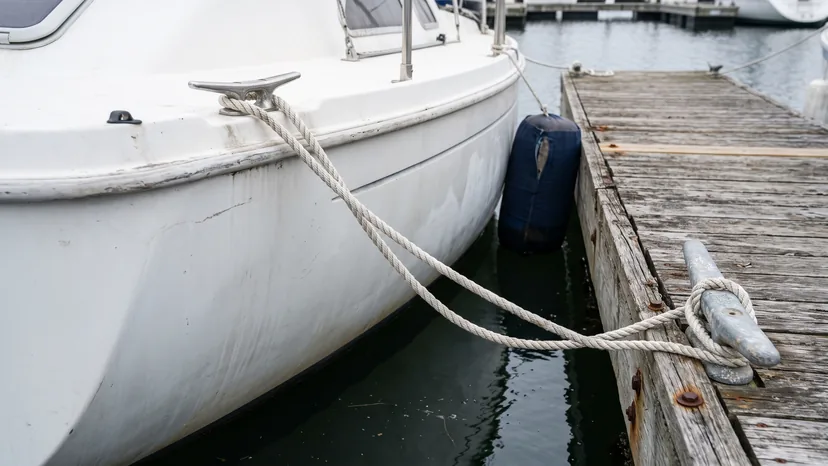
Backing in (stern-to) puts the cockpit next to the dock. That makes boarding easier, especially on boats with a swim platform or a transom step, and often keeps shore power and water hoses within reach. It is harder than going bow-in, because you steer in reverse and have to manage prop walk.
- Pass the slip and set up. Motor past the slip and stop with the boat at an angle to the slip mouth. SAIL suggests about 20 to 40 degrees, with the angle chosen so that prop walk will straighten the boat as it starts to move backward. With a right-handed propeller, prop walk swings the stern to port, so angle the boat so that its stern starts off to starboard of the line into the slip; prop walk will swing it to port as you back.
- Engage reverse gently. Let the prop walk swing the stern into line as the boat gathers sternway. Keep the rudder straight until the boat is moving backward.
- Steer back in. Throttle down to idle reverse to reduce the walk, and steer the stern into the slip with the rudder. If the angle goes wrong, SAIL suggests correcting with a short burst of forward (with the rudder over) or reverse.
- Get the first line on. Usually this is a stern line or an after spring on the windward side. The helmsperson stays at the helm until the boat is held.
- Stop and secure. Use a short burst of forward to stop the boat before the stern reaches the dock, then add the remaining lines.
Because of prop walk, most boats back more easily one way than the other. If your slip asks for a turn against your walk in strong wind, going in bow-first or waiting for calmer conditions may be the safer choice.
Docking in Wind and Current
The general rule is to dock into the wind or current where you can. Good Old Boat calls them "brakes": they slow the boat and give you more control at low speed (Karen Sullivan, "Departures and arrivals", Good Old Boat). How that works out depends on where the wind comes from relative to your slip.
Wind Blowing Out of the Slip
If you go in bow-first, the wind is ahead of you and slows the boat as it enters. This is the easiest case: steer straight in at a crawl and let the wind take off the speed. Backing in, the wind is behind you and pushes the boat in faster, so keep the power low and have the stopping line ready.
Wind Blowing Into the Slip
Going in bow-first, the wind is behind you and keeps pushing the boat forward after you shift to neutral. Good Old Boat's advice for this case is to come in with just enough speed for turning, use a small burst of reverse as you close with the dock to take off most of the way, and stop the boat with a spring line. If your boat backs well, backing in puts the wind ahead of the boat as it enters, so the wind slows it down. NauticEd's approach for this case is to motor past the slip, back up into the wind and turn into the slip.
Wind Blowing Across the Slip
A crosswind pushes the boat sideways as soon as it slows down, toward the leeward pier or the neighbouring boat.
- Keep steerage until you are in. Enter with enough speed to steer, then take the last of the way off with reverse and the lines.
- Windward line first. Make the windward side fast first. If the leeward side is made fast first, the boat can drift onto the neighbouring boat (YACHT).
- Think twice about backing in across a strong crosswind. NauticEd warns that with a right-handed propeller, backing in across the wind fails in high wind: the wind pushes on the bow and prop walk moves the stern to port, so the boat cannot make the turn (Grant Headifen, "Dock Slips Docking Techniques", NauticEd). On such days, go in bow-first or wait.
Current
Current works like wind but acts on the hull and keel instead of the rig. Approach into the current if you can. If wind and current oppose each other, watch how other boats are lying to see which one is stronger. The Oregon State Marine Board notes that in low water a strong current can stop you from docking at all. In tidal water, plan your return around the tide table.
Using Spring Lines
A spring line runs from the boat to the dock at an angle, forward or aft, rather than straight across. It stops the boat moving forward or back, and with the engine in gear against it, it can turn the boat or hold it alongside.
- To stop the boat: an after spring, or a midships line led aft to a dock cleat, stops forward motion as it comes tight. Cruising Club of America safety advice notes that a midships spring helps stop the boat and keep it parallel to the dock. Once it is fast, the skipper can put the boat in gear and pivot it with the helm. Do not expect the crew to stop a heavy boat by pulling on a line.
- To hold the boat alongside: with a spring or midships line fast, Yachting Monthly describes motoring gently ahead with the helm hard over to hold the boat against the pontoon while the other lines go on (Yachting Monthly, "Take the stress out of sailing shorthanded"). Which way to put the helm depends on where the line is led and which side the dock is on, so try it at your own slip in calm conditions. Use idle power; the line is under heavy load, so keep everyone clear of it.
Keep spring lines out of the propeller. Modern Sailing notes that spring lines are the dock lines most likely to foul a propeller because of their length. Pull lines on deck as soon as they come off the dock (Modern Sailing, fouled propeller prevention). When a line is in the water near the stern, shift to neutral until it is back on board.
Docking Short-Handed or Alone
With one or two people aboard, the idea is the same in every method: stop the boat first, then get one line on without jumping.
- Prepare more lines. Yachting Monthly recommends having bow and stern lines ready on both sides, plus midships lines, and asking the marina which side the berth is on and whether to go in bow-first or stern-first.
- Make one line do the work. A midships line (or a long stern spring led through a fairlead) with a loop or bowline in the end can be dropped over a dock cleat once the boat is stopped and parallel. Then motor gently against it to hold the boat while you add the others. Lead it from a proper cleat: Good Old Boat warns that shrouds, stanchions and rail fittings are not designed for docking loads.
- The slipping spring. Good Old Boat describes a solo method: a spring line made fast amidships and led back to the cockpit. Step ashore with it in hand (never leap), take one turn around the dock cleat nearest where the stern will end up and let it slip under pressure to slow the boat, then snub it to stop. Make the stern line fast, move the spring to act as a short midships breast line, and secure the bow.
- Step, don't jump. Step off only when the boat is stopped and close to the pier, holding something fixed. YACHT's advice: "Anyone who feels unsure should not jump."
Leaving the Slip
Leaving takes the same planning in reverse order.
- Plan the exit. Check the wind and current, decide which way the boat must turn in the fairway and how prop walk will affect it if you back out.
- Single up. Walk around the boat and see which lines are under tension: Good Old Boat notes those are usually the ones to release last. Take off the loose lines first. With the wind from astern in a narrow slip, a short breast line from a midships cleat can hold the boat while the others come off.
- Use a spring if the wind is against you. In a tight slip with a crosswind, NauticEd recommends an amidships spring that holds the hull close while the boat swings around the end of the slip, released once the boat has cleared the corner (NauticEd, "Maneuvering a Sailboat out of a Tight Slip"). For backing out in strong wind, SAILING Magazine and Good Old Boat both describe a doubled stern spring about twice the boat's length (Good Old Boat says at least twice): made fast on the stern cleat, looped around the dock cleat and back aboard, then paid out as you back up and used to swing the bow the way you want. Good Old Boat's advice is to keep the engine in neutral while the loose end comes back aboard.
- Crew aboard before the boat moves. Nobody should be stepping on as the boat starts to move.
- Bring the lines in. Get every line and fender on deck quickly, so nothing trails toward the propeller.
Common Docking Mistakes
- Coming in too fast. Speed reduces your reaction time and turns small errors into damage. Arrive slower than feels necessary.
- Turning at the wrong moment. Turning too early or too late into the slip leaves the boat at an angle with no room to correct. Line up early.
- Snubbing the bow line too early. SAIL warns that a line handler who makes the bow line fast while the boat is still moving forward can swing the bow into the dock and the stern out. Keep lines other than the stopping spring slack until the boat has stopped.
- Leaving the helm too early. The Cruising Club of America's advice is for the skipper to stay at the helm until there is nothing left for the helm and engine to do, so keep the engine running until the lines are on and adjusted.
- Not aborting. If the boat is not where you want it as you reach the slip, back out or motor away and try again.
Frequently Asked Questions
Is it better to dock bow-in or stern-in?
Bow-in is simpler because you steer in forward gear; stern-in makes boarding easier. Choose by the wind, your boat's prop walk and the slip.
How fast should you go when docking a sailboat?
As slowly as you can while still steering, using short bursts of power and then neutral.
How do you dock a sailboat alone?
Stop the boat next to the pier, get one midships line or long stern spring onto a dock cleat, and motor gently against it while you add the other lines. Step off only when the boat is stopped and close.
How do you stop a sailboat when docking?
With a short burst of reverse and a spring or midships line that comes tight as the boat reaches its spot, never with hands or feet.
Which dock line should go on first?
Usually an after spring or midships line in calm conditions, and the windward line in a crosswind. Decide before you enter and tell the crew.
Next Steps
Practise in your own slip on a calm day before you need to do it in wind. For the basics of getting underway and coming back in, start with the beginner's guide to sailing a sailboat. Make sure everyone who handles lines can tie a cleat hitch and the other basic knots. For nights away from the marina, read how to anchor a sailboat. If you plan to charter, docking under power is one of the skills courses teach and charter firms check, so see what sailing certifications and charter requirements involve.