Sail smarter, float better

Table of Contents hide
Do you need a license to sail a boat? In the United States, there is no federal license to sail your own recreational boat. Many states do require a boating safety education card, and whether it covers a sailboat depends on the state, the boat's length or engine, and your age. A US Coast Guard license is needed only when you carry passengers who pay.
Certificates from ASA (the American Sailing Association) and US Sailing are not licenses, but charter companies use them to decide whether to hand you a boat. Abroad, many charter areas ask for an International Certificate of Competence (ICC) or a recognized national license. This guide is general information, not legal advice. Sources were read on 13 November 2026; rules change, so check the current rules for the water you will sail on.
Key Takeaways
- No federal sailing license: you can sail your own recreational boat in the US without a license, but your state may require a boating education card.
- State rules vary: some states include sailboats above a set length, others only boats with motors above a set horsepower.
- A captain's license is for paying passengers: friends who voluntarily share the actual costs of the trip are not paying passengers under federal law.
- Certifications prove training: ASA and US Sailing courses are what US charter companies look for, along with a sailing resume.
- Chartering abroad needs paperwork: usually an ICC, an IPC or a national license, and in some countries a VHF radio certificate.
Is There a License to Sail a Boat in the US?
There is no federal license for operating your own recreational boat. The rules that do apply come from your state. Many states require a boating safety education card for some operators. It shows that you passed an approved boating safety course. Some states and course providers call it a "boating license", but it is usually a one-time education certificate, not a license that tests your sailing skills or needs renewal in the way a driver's license does.
Many state courses are approved by NASBLA (the National Association of State Boating Law Administrators). NASBLA-approved courses must meet the ANSI/NASBLA Basic Boating Knowledge Standards, and each state decides which courses it accepts.
Who needs the card depends on three things: the boat (its length, or its engine's horsepower), the operator's birth year or age, and the state. Two examples show how different the rules are:
- Texas requires boater education for anyone born on or after September 1, 1993, who operates a vessel powered by a motor of more than 15 horsepower or a "windblown vessel over 14 feet in length", which covers a sailboat of that size (Texas Parks and Wildlife Department, read 13 November 2026).
- Washington requires its Boater Education Card for operators born after January 1, 1955, of boats with a motor of 15 horsepower or more (Washington State Parks, read 13 November 2026). The rule follows the engine, so a sailboat without a motor of that size is not covered by it.
Other states set their own thresholds, and some include sailboats while others cover only motorized boats. A sailboat with an auxiliary engine may fall under the motor rules when it runs under power. Check the boating agency of the state where you will sail, or use the state selector on the BoatUS Foundation course page, which shows each state's education requirements. If you sail in several states, check the rules for visiting boaters in each one before you go.
Can I Sail a Boat Without a License?
Yes, in the sense that no state or federal sailing license exists for recreational sailing. Whether you need a state boating education card depends on your state, your age and your boat, as shown above. Separately, your boat itself may need state registration or federal documentation; that paperwork is about the boat, not the person at the helm (see boat documentation vs state registration). Being legal is also not the same as being ready: learn the basic rules of the road and safety habits before you take a boat out alone.
When You Need a Coast Guard Captain's License
The US Coast Guard credential that people call a "captain's license" is needed when you carry passengers for hire. Federal law defines a passenger for hire as one for whom "consideration" is paid as a condition of carriage, to the owner, operator or anyone else with an interest in the vessel. Consideration does not include "a voluntary sharing of the actual expenses of the voyage", for example by chipping in for fuel, food or drinks (46 U.S.C. 2101, read 13 November 2026). Taking friends sailing on your own boat while they voluntarily share the actual costs is therefore not carrying passengers for hire. If anyone pays you for the trip itself, it is.
The two common levels are:
- OUPV (Operator of Uninspected Passenger Vessels), the "six-pack": lets you carry up to six passengers for hire on an uninspected vessel of less than 100 gross tons. The minimum age is 18 (46 CFR 11.201). For near-coastal waters, the regulation asks for 12 months of experience operating vessels, including at least 3 months on ocean or near-coastal waters (46 CFR 11.467), with at least 3 months of service within the 3 years before you apply (46 CFR 11.201).
- Master: needed for larger operations, such as inspected vessels that carry more than six passengers. Tonnage and route limits depend on your sea service.
Both require an application to the Coast Guard's National Maritime Center with documented sea time, an exam (often taken through an approved course), a physical and a drug test. Check the National Maritime Center's current checklists before you start; the details change.
Sailing Certifications: What They Are and Who Asks for Them
A sailing certification is proof that you completed a course and showed the skills it covers to an instructor. It is not a legal license: no US law requires one to sail your own boat. The two main US systems are ASA and US Sailing. Both run graded keelboat courses through accredited schools, from a first day sail to coastal passage making.
The people who ask for them are mainly charter companies. A bareboat charter means you rent the boat without a paid skipper, so the company needs evidence that you can handle it. A certificate from either system, together with a record of your sailing experience, is the usual way to show that.
ASA vs US Sailing
Both organizations build skills step by step. The table follows each body's published course pages (read 13 November 2026). Course length, schedule and price are set by each school, so they are not listed here.
| Level | ASA course | ASA prerequisite | US Sailing course | US Sailing prerequisite |
|---|---|---|---|---|
| First keelboat course: crew and skipper a small keelboat in light to moderate conditions | ASA 101 Basic Keelboat Sailing | None | Basic Keelboat | None in most cases; schools may add pre-course work |
| Cruising boat with an auxiliary engine in moderate conditions | ASA 103 Basic Coastal Cruising | ASA 101; ASA recommends at least 24 hours on the water first | Basic Cruising | Basic Keelboat |
| Bareboat level: skipper a cruising boat on a charter, including anchoring | ASA 104 Bareboat Cruising | ASA 103; ASA recommends at least 80 hours on the water first | Bareboat Cruising | Basic Cruising |
| Coastal navigation (classroom or online) | ASA 105 Coastal Navigation | None | Coastal Navigation | None |
| Coastal passages in all conditions, day and night | ASA 106 Advanced Coastal Cruising | ASA 104 and ASA 105 | Coastal Passage Making | Bareboat Cruising and Coastal Navigation |
| Catamaran | ASA 114 Cruising Catamaran | ASA 104 | Catamaran Endorsement | Bareboat Cruising |
Sources: ASA, "What Sailing Course Do You Need?" and the US Sailing certification course pages.
How to Choose Between ASA and US Sailing
The two ladders cover the same ground, and US charter companies commonly accept either at the bareboat level. Rather than choosing the organization first, choose the school: a school near you or near the water you want to sail, with a schedule that fits and instructors you trust. Ask what boats they teach on, how many students share a boat, and whether the bareboat course includes overnight time aboard. US Sailing also runs racing, youth and instructor programs, which matters if you want to race or teach later.
What Is the IPC?
The International Proficiency Certificate (IPC) is a card that both bodies issue to members who have reached the bareboat level: ASA after ASA 104, and US Sailing after Bareboat Cruising. Both say it is valid for five years. ASA explains that it offers the IPC because it is not easy for a US-based sailor to obtain an ICC, and the card is meant to be shown to charter companies, mainly in Europe (US Sailing IPC page; ASA, "Do I Need an IPC?"; both read 13 November 2026). The IPC is not an ICC. ASA itself advises checking with your charter company before you book, because acceptance is a matter of each country's rules and each company's policy.
Chartering a Sailboat: What Companies Ask For
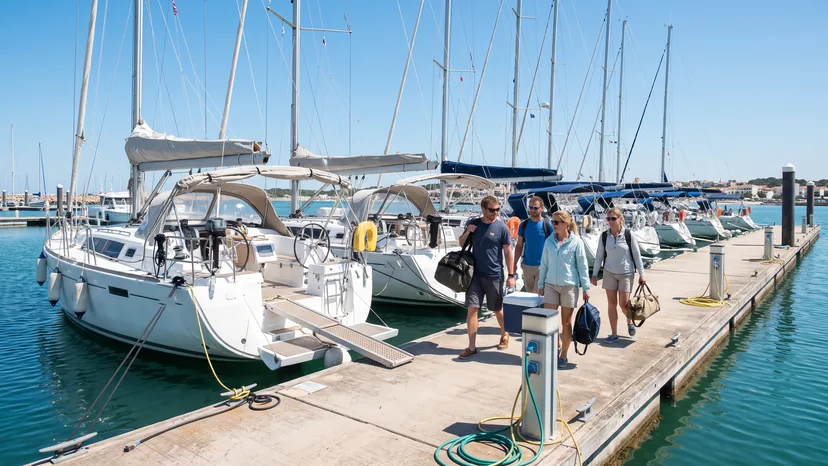
In the US, no law requires a certificate to charter a sailboat, but charter companies set their own rules. Most ask for a sailing resume, and many ask for a bareboat-level certificate such as ASA 104 or US Sailing Bareboat Cruising, or accept equivalent experience. Some may also ask you to sail with a check-out skipper before they release the boat. Our Chesapeake Bay itineraries guide notes what charter firms there ask for.
A good sailing resume lists:
- the boats you have sailed: type, length, and whether they were monohulls or catamarans;
- the waters: inland lakes, bays, coastal or offshore, and the tidal range or currents involved;
- your role on each: skipper or crew;
- how many days and nights, and roughly how many miles;
- anchoring, mooring and docking experience, and night sailing if any;
- courses and certificates, with dates.
Charter companies grade experience in their own ways. Sunsail, for example, publishes levels based on days and miles as skipper on a similar-sized boat, and lists the certificates it accepts for each destination (Sunsail sailing levels, read 13 November 2026). Be accurate: the resume is checked against how you handle the boat at the dock and in the check sail. Practice the skills the charter will need, especially anchoring, before you go.
Sailing Abroad: The ICC and Other Licenses
Outside the US, the rules depend on the country, and many charter areas require formal proof of competence.
The International Certificate of Competence (ICC) is the "International Certificate for Operators of Pleasure Craft" set out in UNECE Resolution No. 40 and used mainly in Europe. The British version is issued by the RYA (Royal Yachting Association) on behalf of the UK government. Each country decides whether it requires or accepts the ICC, and acceptance of Resolution No. 40 across Europe is uneven.
Examples, as published by the RYA for visiting UK-flagged boats (RYA, evidence of competence abroad, read 13 November 2026): Croatia lists proof of competence as essential, Spain, Portugal and Turkey list it as required, and for the coastal waters of Northern Europe the ICC is generally not required. Charter companies apply their own lists on top of that. Our Croatia sailing guide covers what you need there.
How a US Sailor Can Get an ICC
According to the RYA's ICC application notes (version dated 25 November 2025), the RYA issues the ICC to UK nationals and UK residents, and also to nationals of countries that have not accepted Resolution No. 40, because they may otherwise be unable to obtain one. The United States is not on the RYA's list of countries that have accepted it, so a US national can usually apply. The RYA warns that it is the applicant's responsibility to check eligibility before paying for training or an assessment, and that eligibility ends if the applicant's country later accepts the resolution. Confirm your eligibility with the RYA before you book.
To get an ICC you must show competence in two parts: a type of vessel (sail or power) and a type of water (coastal or inland). You can do this with an eligible RYA practical course certificate, such as RYA Day Skipper practical, or by passing an ICC assessment at an RYA training centre. The RYA ICC pages explain the application.
Two other pieces of paperwork often come up:
- VHF radio certificate: some countries and charter companies require the skipper to hold a VHF radio operator certificate in addition to a sailing license. Sunsail, for example, lists this for Croatia. Check your destination's requirements early, since the course takes time to book.
- CEVNI test: according to the same RYA notes, to have the inland waters category on an ICC you must pass the CEVNI test on European inland waterway rules. It is a separate test, required in addition to proof of practical competence.
Can You Get an ICC Online for Free?
No. Offers of an "ICC online" usually mean the online CEVNI test, which covers only the inland waters category. The RYA cannot issue an ICC without evidence for a vessel type as well, which means a practical course certificate or a practical assessment. The application itself is free for RYA members; non-members pay a fee, and courses and assessments are charged by the training centre.
UK and Europe in Brief
In the UK, the skipper of a pleasure vessel needs no certificate of competence in UK territorial waters, provided the vessel is either less than 24 meters in load line length or less than 80 gross tons (RYA, pleasure craft regulations, read 13 November 2026). Inland waterways have their own rules, so check with the navigation authority. Elsewhere in Europe, national rules differ, and many countries expect a national license or an ICC.
Which Path Fits You?
- You want to sail a small boat locally: take your state's boating safety course if your state requires it for your boat and age, then take lessons or a first keelboat course (ASA 101 or US Sailing Basic Keelboat). Our guide to learning to sail covers the first steps.
- You want to charter a bareboat in the US: work up to the bareboat level (ASA 101, 103 and 104, or US Sailing Basic Keelboat, Basic Cruising and Bareboat Cruising) and keep a sailing resume as you build experience.
- You want to charter in the Mediterranean: reach the bareboat level, then ask your charter company which documents it accepts for that country: an ICC, an IPC or a national license, and whether you need a VHF certificate. Start early; some companies want documents weeks before departure. Our trip planning guide covers the rest of the preparation.
- You want to take paying guests: you need a US Coast Guard credential, usually the OUPV for up to six passengers for hire.
Frequently Asked Questions
Do you need a license to sail a boat around the world?
There is no single international sailing license. Your boat needs the paperwork of its flag state, and you follow the rules of each country you visit; some require an ICC or a national certificate for certain waters or boat sizes. Long-distance cruisers usually rely on their training records, boat documents and a VHF or radio license, and check each country's requirements before they arrive.
Is ASA or US Sailing better?
Neither is better in general. The courses cover the same skills, and charter companies commonly accept either at the bareboat level. Choose by the school, its location and its instructors.
How long does it take to get a bareboat certification?
Both systems build to it in three courses: ASA 101, 103 and 104, or US Sailing Basic Keelboat, Basic Cruising and Bareboat Cruising. ASA recommends at least 24 hours on the water before ASA 103 and at least 80 hours before ASA 104. Schools schedule the courses in different ways, so the total time depends on the school and on how much you sail between courses.
Can I get an ICC online?
Not entirely. You can take the CEVNI test for inland waters online, but the ICC also needs proof of practical competence: an eligible RYA course certificate or an ICC assessment on a boat.
Do I need a license to rent a sailboat?
In the US, there is no federal license to rent a sailboat, but your state's boating education rules still apply, and the rental or charter company decides what experience or certificates it accepts. Abroad, many countries require a license, an ICC or an IPC to charter a boat without a skipper.
Next Steps
- Check your state's boating education rule for your boat and age.
- Pick a school and book a first keelboat course if you are starting out.
- Start a sailing resume now, and add every trip to it.
- If you plan a charter abroad, ask the charter company which documents it needs, and check your ICC eligibility with the RYA early.